
Why patio-led planning works
Pick the stone that fits
We compare porcelain and sandstone by look, upkeep and the feel you want.
Patios extended with useful paths
Secondary paving helps the garden flow instead of stopping at one slabbed area.
Drainage checked before laying
Levels and thresholds are assessed early so the finished patio works properly.
Choosing the patio style that suits you
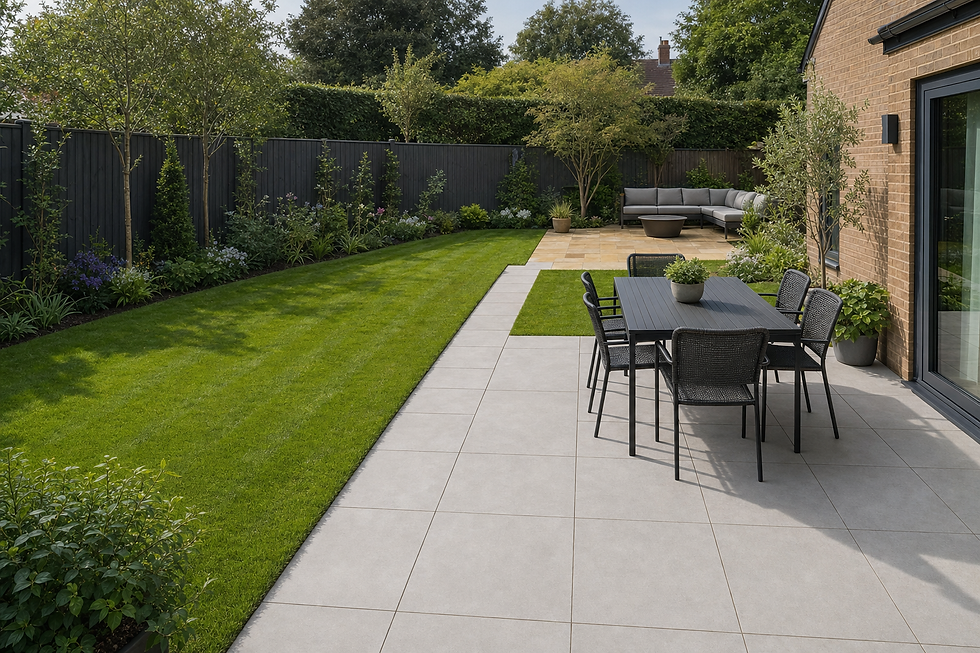
If your main focus in Market Harborough is the back garden, the choice between porcelain, sandstone and general garden paving deserves proper thought. Porcelain gives a cleaner, more precise look with consistent slab sizes, while sandstone brings natural variation and a softer feel. Secondary paving for paths or smaller seating areas can then extend the main patio so the whole garden works as one layout rather than a single hard rectangle outside the door. The best answer depends on how you want the space to look and how you plan to use it.
Survey details that protect the finish
We travel from Hinckley to complete patio and paving work at homes in Market Harborough, and the survey stage is where the practical questions get answered. Levels, thresholds and drainage matter a great deal with garden paving, especially where doors, steps or existing surfaces are involved. Access for materials and the condition of the current ground also affect the plan. Once we've seen those details, we can explain which paving option suits the property and how the layout can be built without the finished space feeling cramped or awkward.
Frequently asked questions
Should we choose porcelain or sandstone for a patio in Market Harborough?
Porcelain suits a cleaner, more contemporary style with consistent slab sizes, while sandstone has natural variation and a softer character. The better choice depends on the property, the feel you want and how much visual movement you like in the finished paving.
Can extra garden paving extend the patio usefully?
Yes. Paths, side areas or a second small paved zone can make the main patio feel much more connected to the rest of the garden. That often improves circulation and helps the outside space work as more than one flat sitting area by the back door.
Why are drainage and thresholds so important with patio work?
Because garden paving has to sit well against doors, steps and the existing ground as well as looking good. If levels are wrong, you soon notice puddles, awkward steps or paving that feels cramped. Those details are best solved during the survey, not after laying begins.