
What good outdoor masonry should achieve
Details that hold the space together
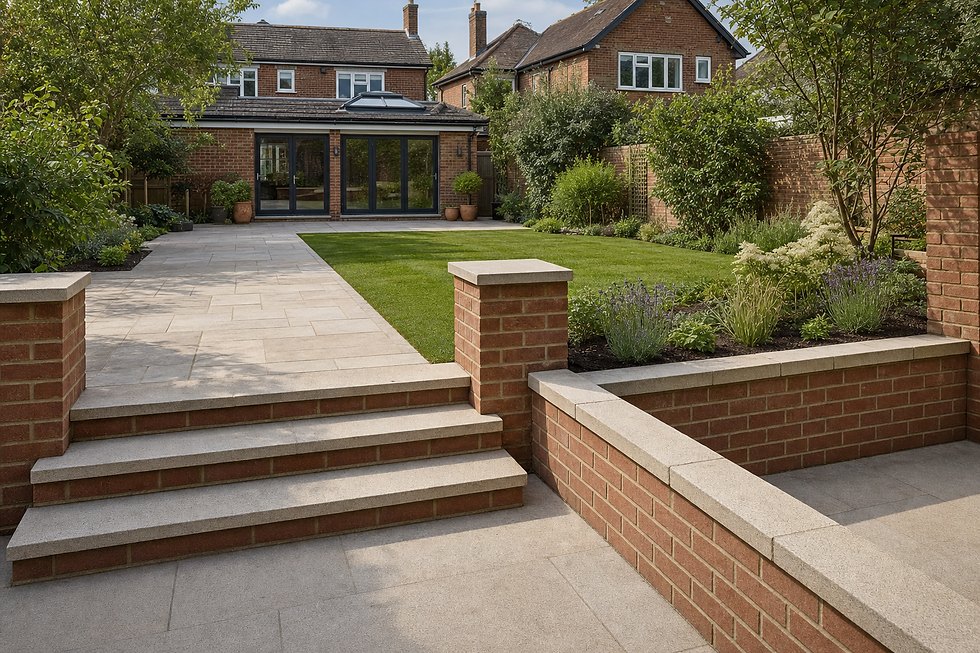
Steps, piers and edging give the garden more structure and a cleaner finish.
Brick or block chosen for the job
Visible finishes and structural cores are planned around what the feature needs.
Linked neatly to other surfaces
Masonry details can tie driveways, patios and level changes into one scheme.
Masonry details that make the job feel finished
Outdoor brickwork and blockwork often carries more weight in a project than people expect. Steps, piers, raised planters, edging and small structural features all help hold a garden together and make level changes look intentional rather than awkward. We build visible facing brickwork where appearance matters, and we can use blockwork where the job needs a strong structural core or a finished surface on top. Matching the brick or block, choosing the bond and getting the mortar colour and joint profile right all affect whether the finished detail sits comfortably with the rest of the property.
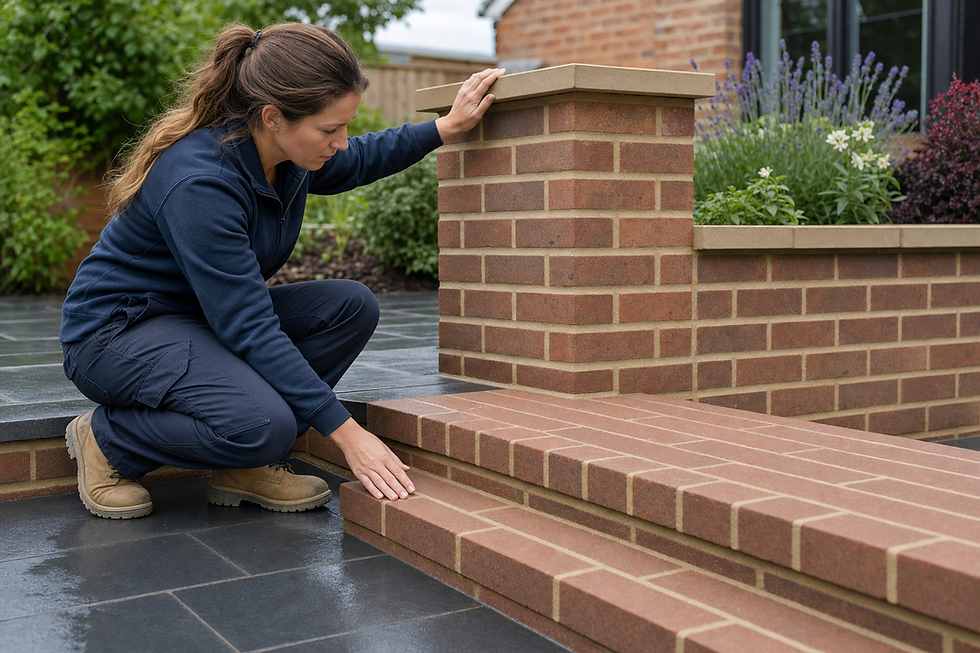
Sound support and straight lines matter most
Good masonry starts with proper support and careful lines. We make sure the foundations suit the job, keep the courses level and work with the weather in mind so the mortar has the best chance to cure properly. Those basics sound simple, but they're often the difference between brickwork that looks clean and stays sound, and brickwork that always seems slightly off. Because we also handle driveways, patios and paving, we can connect the masonry details to nearby surfaces and level changes instead of treating them as an isolated extra.
Frequently asked questions
When is brickwork better than blockwork in the garden?
Brickwork is usually chosen where the visible finish matters, such as steps, piers or decorative features. Blockwork can provide the structural body of a feature or sit behind another finish. The right choice depends on how the element will look and what it needs to do.
Can brick and block details match existing paving?
Yes, and that's often what makes the whole scheme feel properly tied together. Brick or block format, bond, mortar colour and joint profile all play a part, as does how the masonry meets nearby paths, patios or changes in level.
Why are foundations so important for small garden structures?
Even modest features need support. If the base is weak or the courses are not kept accurate, steps, piers or raised details can start to shift or look untidy. Good lines and solid foundations are what make small masonry features stay sharp over time.