
Why smaller paved areas matter more than you think
Useful routes through the garden
Paths and links reduce muddy shortcuts and make the space easier to move through.
Paved zones where they help most
We shape seating and utility areas around daily use, not just empty space.
Designed to fit wider landscaping
Levels, materials and edging can tie in neatly with other outdoor work.
Paving that makes the garden easier to use
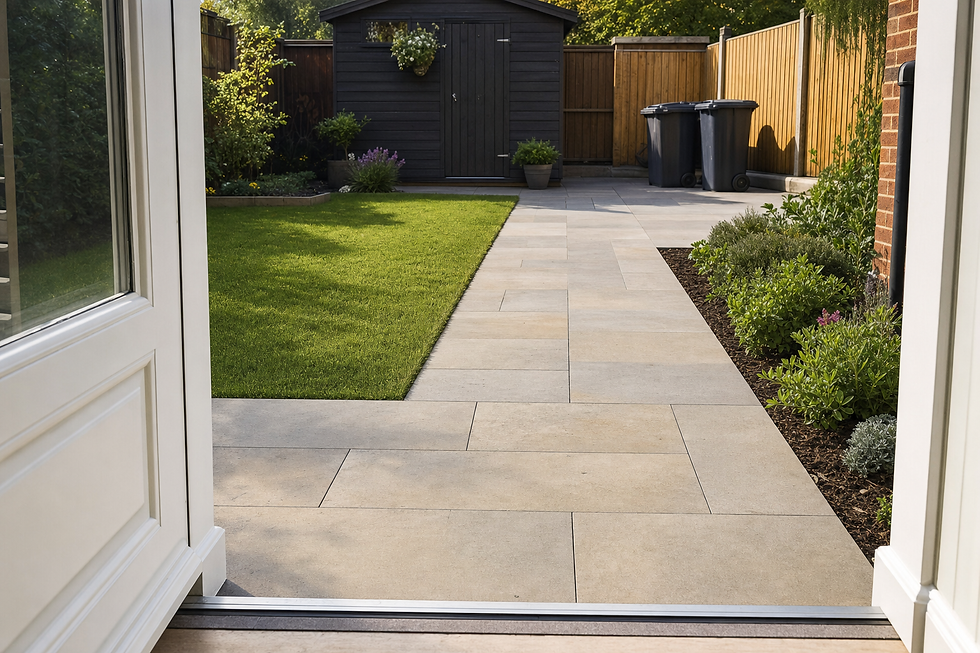
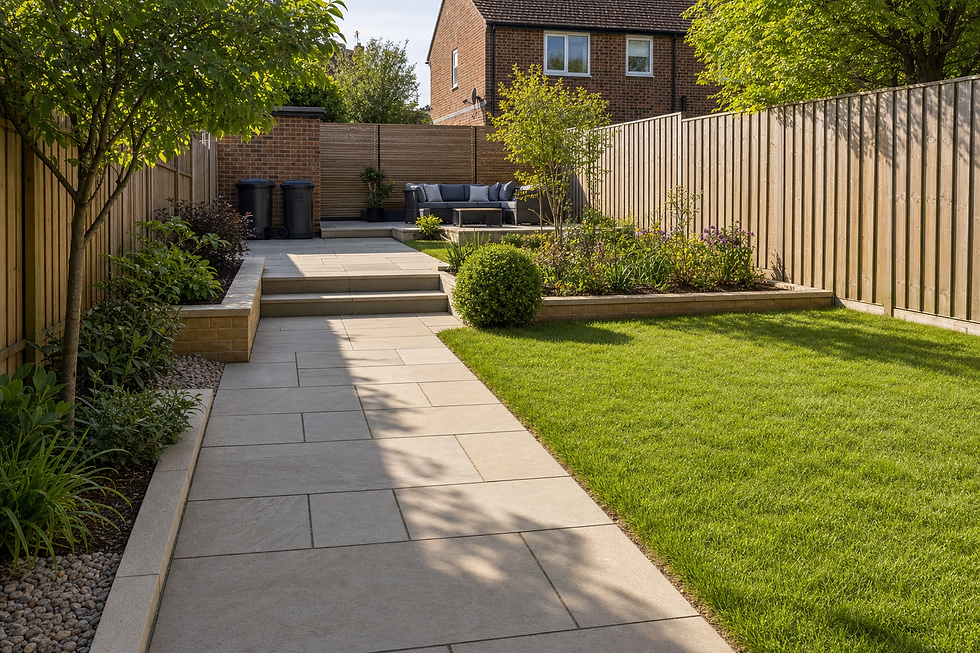
Garden paving is often what makes the whole outside space work properly. A clear path to the shed, a dry route to the bins, a neat spot for seating or a paved strip outside the back door can remove a lot of everyday irritation. We plan these areas around how you move through the garden, where the ground rises or falls and how the paved sections connect with lawns, planting beds and entrances. The aim isn't to cover everything in stone. It's to put useful hard surfaces in the right places so the garden feels easier to use in all seasons.
Layout, levels and joins done with care
Material choice matters, but layout matters just as much. Different paving formats and finishes suit different levels of foot traffic, cleaning needs and visual styles, and we can help you choose something that works with what is already there. We also pay attention to thresholds, edging, drainage, steps and changes of direction, because those are the details that make garden paving feel deliberate instead of improvised. If the job sits within a wider landscaping plan, we can coordinate the paved areas with patios, turf, fencing or masonry work.
Frequently asked questions
What areas can garden paving improve?
It's useful for far more than main patios. Paths, seating areas, utility spaces, bin stores and links between different parts of the garden all benefit from firm, well-planned paving. Small sections of hard surface often solve the everyday annoyances that make a garden awkward to use.
How do you plan paving around steps and level changes?
We look at how people move through the space, where the ground rises or falls and how the paved areas meet doors, lawns and planting beds. That helps us decide where steps, edging and drainage details need to sit so the layout feels natural and safe to use.
Can garden paving be done with other landscaping work?
Yes, and it often makes sense to plan it that way. Paths and secondary paved areas can be coordinated with patios, turf, fencing or masonry so the materials, levels and routes work together. It's usually easier than trying to bolt each piece on later.