
Why tarmac still makes sense for many homes
Clean look on larger frontages
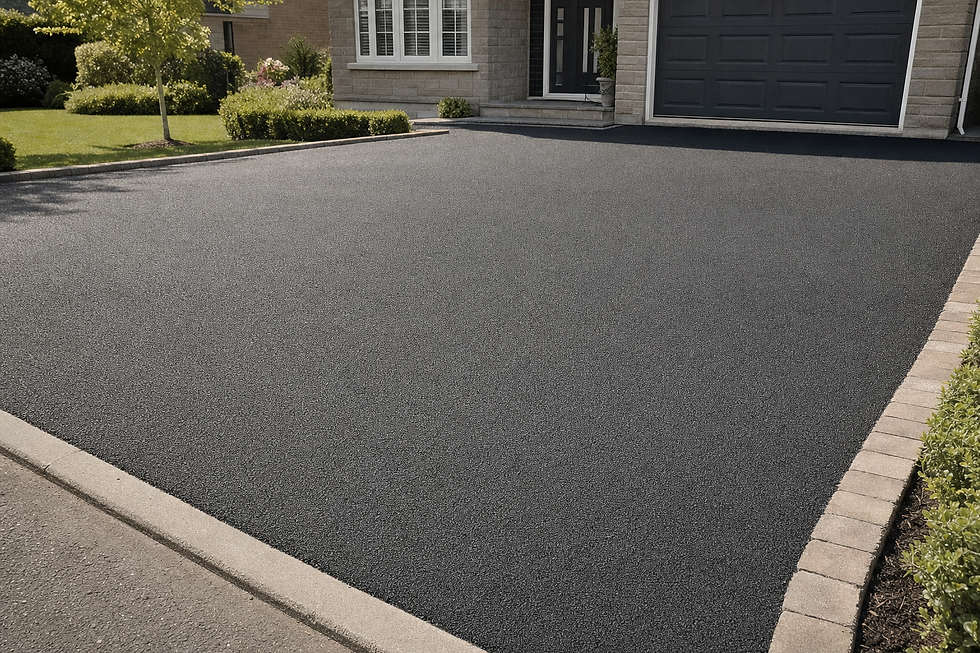
The uniform surface keeps bigger parking areas calm and easy on the eye.
Edges that help hold the shape
Kerbs or borders support the perimeter and stop the finish looking vague.
Falls formed before laying begins
Water control is built into the plan instead of left to chance later on.
A straightforward surface for regular traffic
A tarmac driveway suits homes where the main goal is a hard-wearing, uncluttered surface that deals well with regular vehicle traffic. It works particularly well on larger frontages, where a uniform finish can make the area look calmer and easier to use. That doesn't mean it's just poured and forgotten. The shape of the space, how cars enter it, where water needs to run and how the edges are handled all make a big difference to how the driveway performs. When those details are right, tarmac gives you a practical surface that does its job without demanding attention every weekend.
Strong support below and around the surface
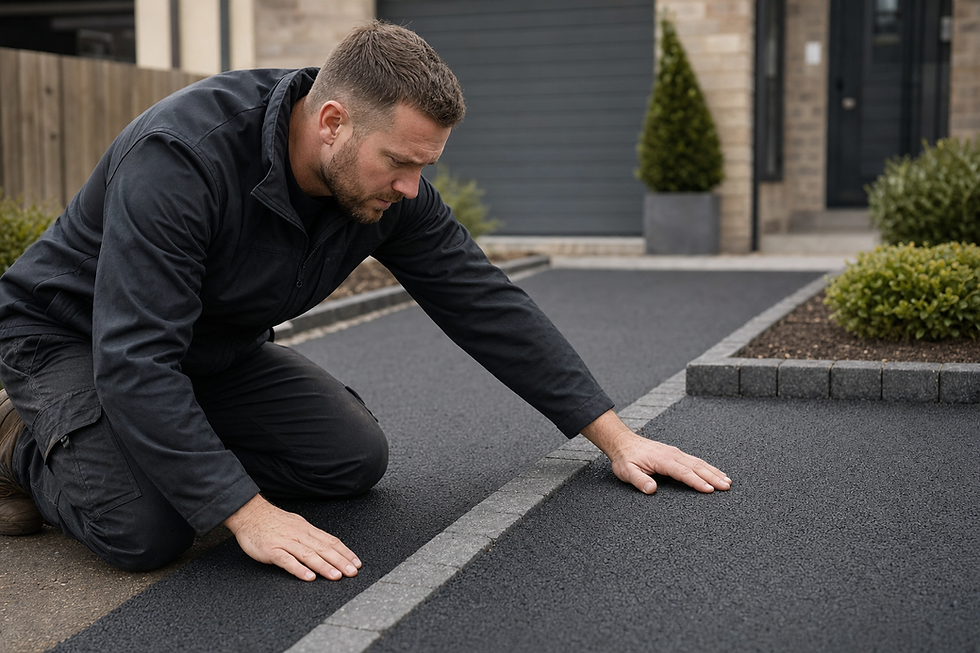
The strength of a tarmac driveway comes from the preparation under it and the support around it. We excavate as needed, build a compacted foundation, form the levels and falls, then lay and compact the surface so it finishes evenly. Around the perimeter, defined edges such as kerbs or block borders help the drive keep its shape and sharpen the appearance at the same time. We also work carefully around covers, thresholds and other fixed points, because neat finishing at the edges is usually where rushed work gives itself away.
Frequently asked questions
Is tarmac a good choice for larger driveways?
Often, yes. Tarmac works well on larger areas because it creates a uniform surface that looks neat without feeling overly busy. It's also practical for regular vehicle traffic, provided the foundation, levels and edge support are built properly underneath it.
Do tarmac drives still need edging?
Yes. Defined edges help support the perimeter of the driveway and keep the shape sound over time. They also sharpen the look of the job. Kerbs, block borders or similar details can make the difference between a tidy finish and one that looks unfinished around the sides.
How do you stop water sitting on a tarmac driveway?
We plan the falls and levels before laying the surface so water is directed where it should go rather than pooling in the middle or against the house. Good drainage is part of the build from the start, not a last-minute fix once puddles appear.