
What strong fencing should sort out
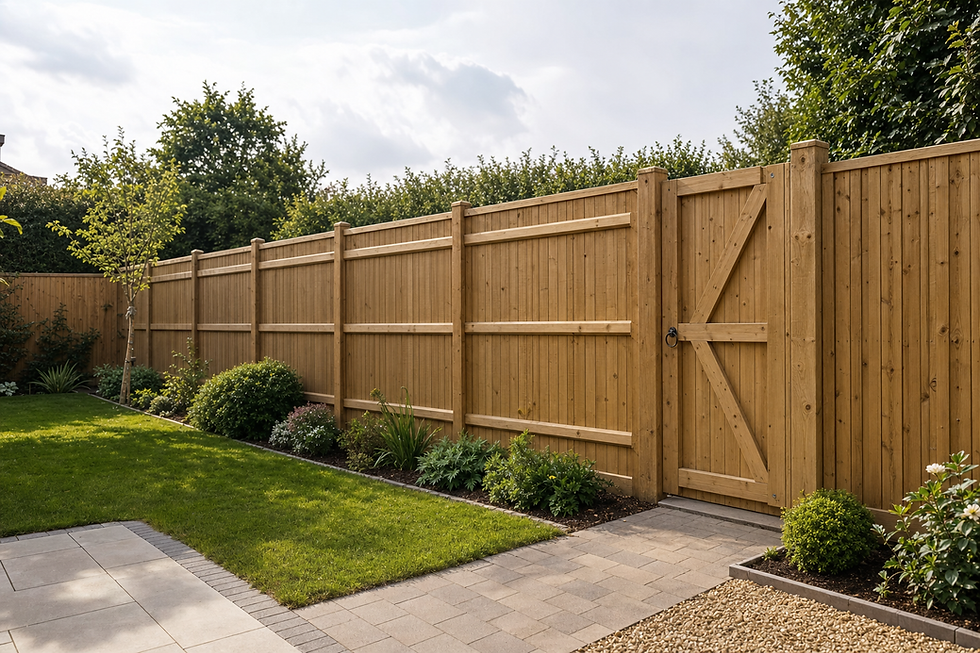
Privacy where it matters
We help position the fence around the real weak spots in the boundary line.
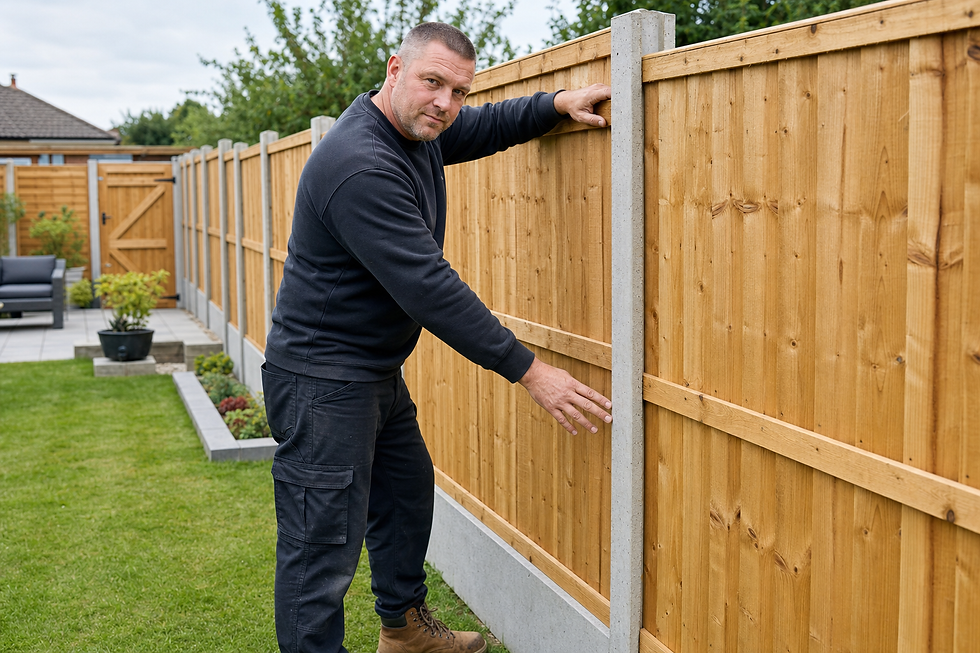
Posts set to keep the run stable
Accurate spacing and secure setting give the fence its long-term strength.
Works with the rest of the job
Fencing can be timed properly with paving, turfing and wider landscaping.
Boundaries that feel firmer and look tidier
New fencing does more than mark the end of the garden. It can give you privacy where you actually need it, improve security, tidy up an awkward boundary and make the whole space feel properly finished. We fit common arrangements such as panel fencing, closeboard fencing, timber or concrete posts, gravel boards and matching gates, then tailor the layout to the ground rather than forcing a straight idea onto a crooked site. Height, wind exposure, changes in level and access all need thinking through before the first post hole is dug.
Straight lines start with the posts
A fence is only as good as its line and its posts. We set the posts carefully, space the sections properly and work to a stable run so the finished fence looks straight and stays firm. On mixed garden projects, the order of work matters as well. It often makes sense to establish the boundaries before fresh turf goes down or before delicate paving edges are finished, simply to avoid needless damage later. When the sequence is planned well, the boundary work supports the rest of the garden instead of getting in its way.
Frequently asked questions
What type of fencing is best for privacy?
That depends on the setting, the look you want and how exposed the garden is. Panel fencing and closeboard systems are common choices, and the right height and post arrangement matter just as much as the board style. We help you weigh appearance against practical needs.
Do fence posts really make that much difference?
They do. If the posts are poorly placed or weakly set, the rest of the fence rarely stays straight for long. Secure posts, correct spacing and a stable line are what give the finished fence its strength, especially where wind or uneven ground puts extra stress on it.
Should fencing be installed before turf or paving?
Often, yes. Establishing the boundary first can prevent later damage to fresh lawns, edges or decorative finishes. The best sequence depends on the job, but we think it through early so one part of the project does not undo the next.