
Why turf works for tired gardens
Fast visual lift for the whole space
Fresh turf gives the garden an established look without months of waiting.
Ground prep comes first
Soil improvement, levelling and firming do most of the hard work.
Aftercare explained clearly
We talk you through watering, first mowing and easing back into use.
A lawn reset without the long wait
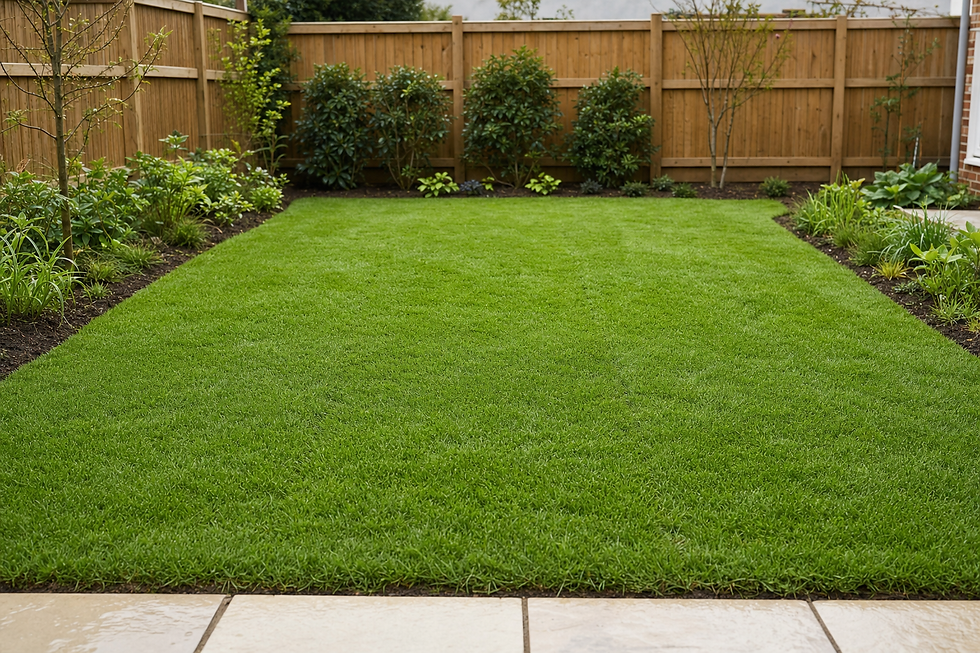
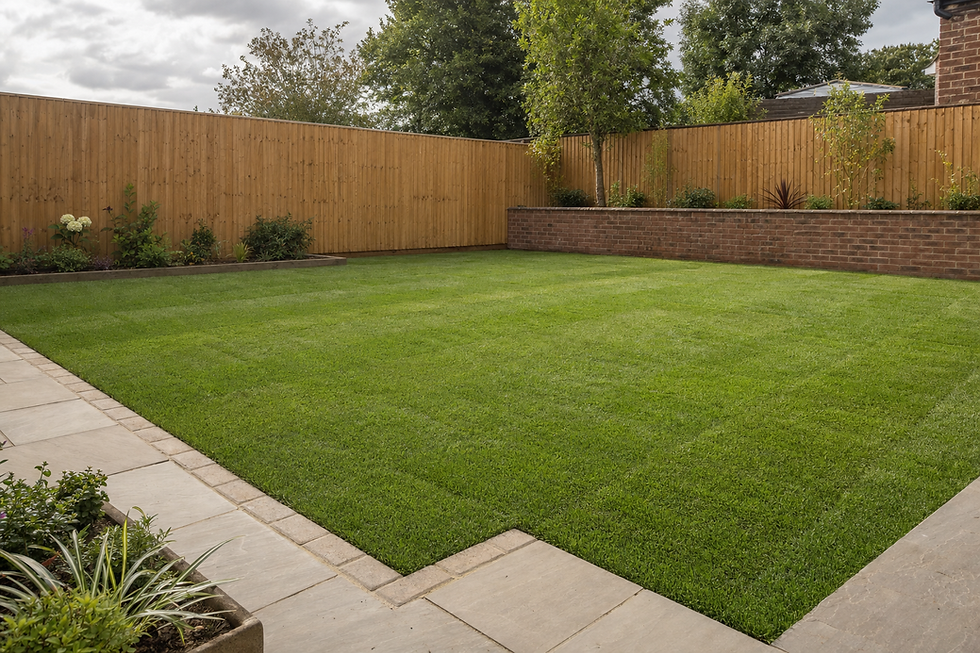
If the lawn is thin, patchy or mostly moss with ambitions, new turf can reset the garden much faster than seed. It's a good choice for full makeovers, for replacing worn grass after building work or for gardens that need a clear finished look without months of waiting. The result depends heavily on the ground below. We remove debris and old growth, improve and cultivate the soil, level the area and firm it correctly so the new lawn has the best possible start. Fresh turf on badly prepared ground rarely stays fresh for long.
Prep the ground, then protect the start
Once the base is ready, we lay the turf with close joints, staggered lines and neat cuts around edges and features. After that, the focus shifts to establishment. Prompt watering, keeping the lawn moist, timing the first mow and staying off it while the roots knit in all make a real difference. We also make sure the final levels work with nearby patios, paths and drainage, because a lawn that traps water against paving soon becomes a muddy nuisance. With the right preparation and aftercare, the garden starts looking settled far sooner than it would from seed.
Frequently asked questions
Is turf better than seeding a new lawn?
If you want a quicker finished look, yes. Turf gives you an established surface far sooner than seed, which is useful on makeover jobs or where the old lawn has completely had it. The trade-off is that the ground preparation still needs to be done properly beneath it.
How should a new lawn be watered after laying?
It needs prompt watering and steady moisture while the roots begin to take. Drying out early can undo good laying work quickly. We explain the basics of aftercare, including watering, the first mow and when normal foot traffic should ease back in.
Why is levelling important before turf goes down?
Poor levels can leave hollows that hold water or high spots that dry out too quickly and scalp when mown. We level and firm the soil so the lawn sits neatly against paths and patios and has a much better chance of establishing evenly across the whole area.