
What a well-built garden wall should do
Define space more clearly
Walls can mark boundaries, frame beds and bring order to awkward areas.
Built to suit its real purpose
Thickness, bonding and support are planned around what the wall must handle.
Matched to nearby paving and brickwork
Materials and proportions are chosen so the wall sits naturally in place.
Walls that do a job as well as look right
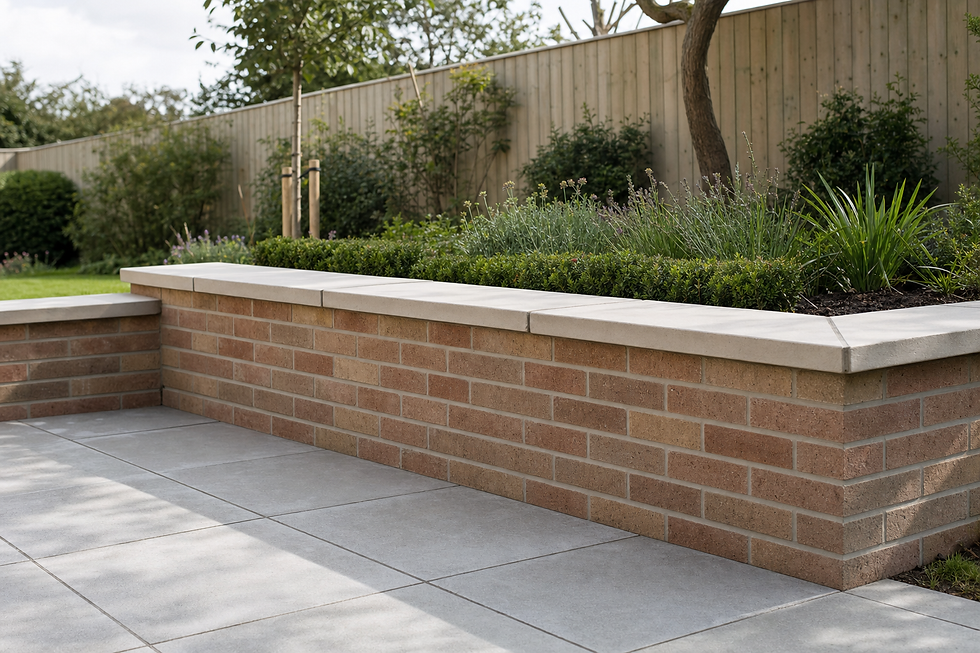
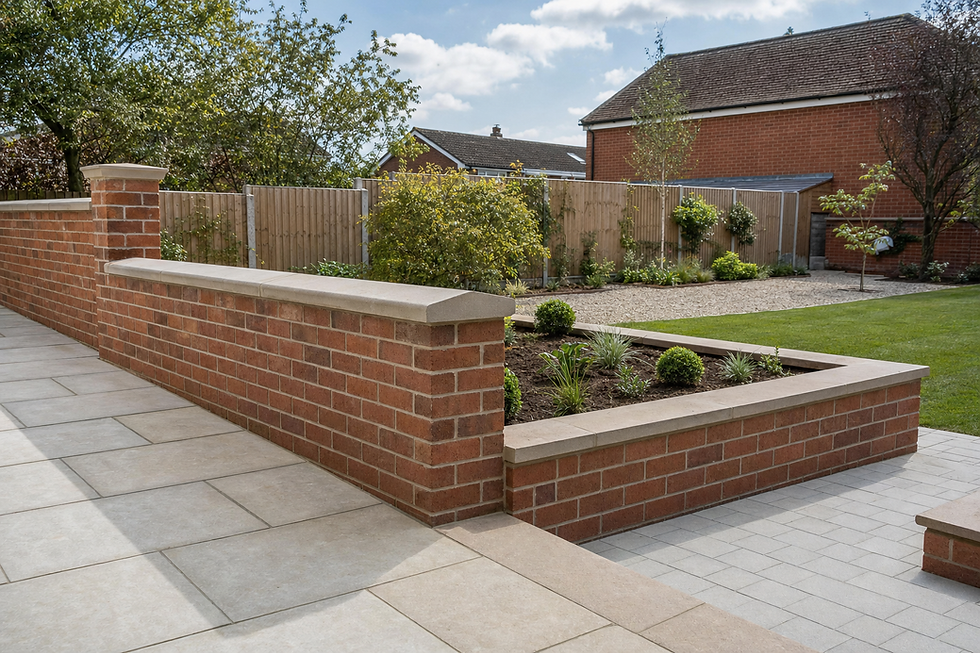
A garden wall can do several jobs at once. It might define a boundary, form a raised bed, screen part of the garden or manage a change in level that would otherwise be awkward to use. We plan the wall around what it actually needs to do, then help you think through the finish, whether that means brick, block with a finished face, straight runs, curves, piers or coping details. The proportions matter as much as the materials. A wall that is too slight for its job, or too heavy for its setting, never quite looks or performs right.
Support, drainage and accuracy all count
The hidden parts matter here as much as the visible face. Foundations, thickness, bonding and straight accurate building all need to suit the wall's purpose and dimensions. Where a wall is retaining soil, drainage becomes especially important because water pressure can do quiet damage over time. We also think about how the wall relates to nearby paving, steps and existing brickwork so the finished structure feels like part of the property rather than something dropped in later. Done well, a wall gives shape to the garden and solves practical problems at the same time.
Frequently asked questions
What can a garden wall be used for?
A wall can mark a boundary, hold back soil, frame a raised bed, create screening or simply give the garden more shape. The key is matching the design and build-up to the job it needs to do, rather than treating every wall as the same sort of feature.
Do retaining walls need extra drainage?
Yes, they often do. When soil sits behind a wall, water pressure can build quietly and cause trouble over time. Suitable detailing to manage that water is a big part of building a retaining wall properly, not an optional extra tagged on at the end.
Can a new wall be matched to nearby paving or brickwork?
Usually, yes. Material choice, size, bond and coping details can all be used to tie the wall into nearby paving, steps and the existing house. That coordination helps the wall look as though it belongs there rather than standing apart from the rest of the garden.